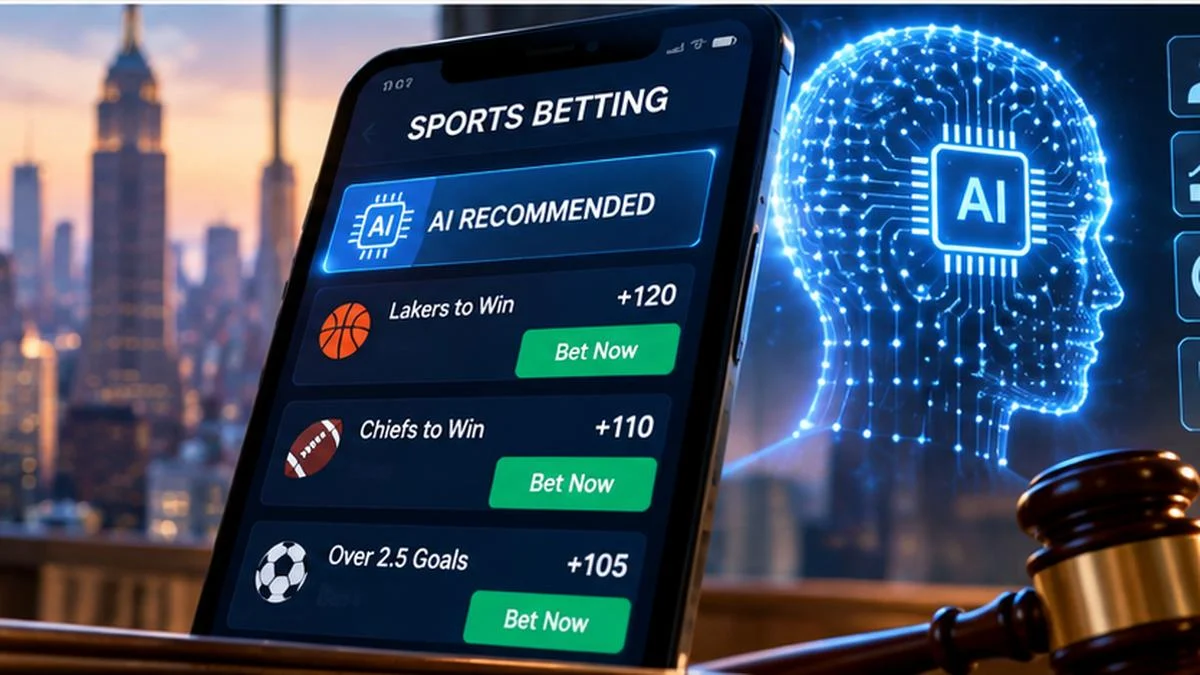
Sports betting apps know quite a lot about their users. They can see which teams you follow, how frequently you place bets, how much money you deposit, and which promotions catch your attention. Artificial intelligence makes it possible to turn all that information into highly personalized offers.
But should a sportsbook be allowed to use AI to decide which promotion might persuade you to place another bet? New York regulators are moving toward new restrictions on exactly that practice. On October 9, 2026, the New York State Gaming Commission advanced proposed rules designed to limit AI-powered betting promotions and strengthen protections for players showing signs of potentially harmful gambling behavior.
The proposals received additional industry coverage on October 13.
What Is New York Proposing?
The commission advanced two related proposals. The first focuses on how gambling operators use artificial intelligence when communicating with customers. The second focuses on identifying players whose gambling activity may indicate a problem.
The proposed changes include:
- Restricting AI-powered personalized promotions and betting recommendations.
- Requiring mobile sportsbooks to identify potentially at-risk customers.
- Introducing specific behavioral triggers for further account reviews.
- Requiring operators to provide appropriate responsible gambling information and interventions.
- Limiting direct marketing to customers identified as being at risk.
These are proposed regulations, not rules that have already taken effect. The commission’s action moves them further through the regulatory process.
Why Are Personalized Betting Offers a Concern?
Imagine opening a betting app after losing several wagers. Instead of encouraging you to stop, the app presents a promotion tailored to the sports you follow or your previous betting activity. Perhaps it’s a bonus, a suggested wager, or a special offer designed to catch your attention.
Personalization isn’t automatically harmful. Plenty of online services use it. The concern is what happens when personalized marketing is combined with gambling behavior.
A sportsbook may have detailed information about a customer’s habits, including activity that could suggest financial or gambling-related difficulties. Using that information to encourage additional betting creates an obvious conflict. The same data that could help identify a struggling player might also be used to encourage more gambling.
New York’s proposal aims to address that problem.
How Would Sportsbooks Identify At-Risk Players?
The proposed rules also introduce specific conditions that could trigger a closer review of a customer’s account. According to the commission’s published proposal, examples include:
- Depositing more than $10,000 within 24 hours.
- Repeatedly visiting the self-exclusion process without completing it.
- Increasing gambling limits several times within a short period.
- Spending significantly more time using a betting account than before.
- Repeatedly cancelling withdrawal requests.
These signals would not automatically mean someone has a gambling disorder. Instead, they would trigger additional checks by the operator. Depending on the findings, a sportsbook could be required to contact the player, explain available protective tools, or take further action.
The idea is to identify potentially harmful patterns before they develop into more serious problems.
Does This Mean AI Will Be Banned From Sports Betting?
No. That’s an important distinction. The proposal targets particular uses of artificial intelligence, especially personalized promotions and suggested wagers.
It does not amount to a general ban on AI technology. AI can also be used for fraud detection, security monitoring, and identifying potentially risky gambling behavior. In fact, those protective applications could become increasingly important as regulators demand more effective safeguards.
The question isn’t simply whether sportsbooks should use AI. It’s what they should be allowed to use it for.
What Happens Next?
The proposals must go through the remaining regulatory process, including public comment and further consideration by the commission. That means the final requirements could still change. For now, licensed betting platforms are not automatically subject to the newly proposed restrictions simply because the commission advanced them.
But the direction is clear. Regulators are paying closer attention to how gambling companies use customer data, automated recommendations, and personalized marketing. For players, the biggest potential change is fewer AI-driven betting offers based on personal behavior, alongside stronger checks when gambling patterns suggest a problem.
Whether the proposed rules will be effective depends on their final wording and how consistently operators apply them.